Services / Operations
Operations Consultancy
Operational readiness before handover and review of facilities in service.
When clients need this
Clients use this service when a facility is approaching handover and the operations team has not yet run it, when monitoring does not support the decisions operators have to make, or when a review is needed of how the design intent has translated into day-to-day practice.
UBIK reviews and develops the operating model of a data center against its actual topology, before handover and for facilities already in service. The work covers operational readiness, O&M frameworks and procedures, maintenance and escalation models, DCIM and monitoring requirements, and the risks that remain after construction. For an existing facility, the same review finds where practice has drifted from design.
What UBIK provides
- Operational readiness assessment against the handover programme, with the gaps ranked
- O&M framework: standard, maintenance and emergency operating procedures tied to the facility topology
- Maintenance and escalation model review: what can be taken out of service, when and by whom
- DCIM and monitoring requirements: the decisions operators must make, and the data and alarms that support them
- Operations risk register and ranked improvement plan with owners and dependencies
Method
The steps in the order the work happens. Each step closes with a record the client keeps.
- 01
Read the facility as built
The topology, the control sequences and the commissioning evidence are the starting point. Procedures are written for the installation that exists, with its isolation points, its interlocks and its margins.
- 02
Rehearse maintenance and failure states
Each maintenance state and each credible failure is walked through with the operations team: who does what, in what order, with which indication. The gaps between the procedure and the facility are identified here and closed before the procedure is issued.
- 03
Write monitoring requirements from operator decisions
DCIM and BMS requirements are written from the decisions operators make: capacity headroom, alarm response, maintenance release, energy and water reporting. Points lists, alarm priorities and dashboards follow from those decisions.
- 04
Ranked improvement plan
Findings become a ranked improvement plan with owners, dependencies and dates, reviewed with the team that will carry it out.
How the system fits together
The system or process this service works on, drawn by UBIK.
In depth
How UBIK approaches this service, in the detail a technical buyer evaluates. Each part opens separately.
01Procedures for the facility as built
In a facility with a sound design, operational failures commonly come from practice: a procedure written for a generic facility, an alarm that reported a condition nobody was watching, a bypass left in place after a maintenance window, redundancy consumed by five years of growth. The design intent is intact on the drawings and absent from the daily practice. Operations Consultancy closes that gap, before handover for a new facility and on request for an existing one.
UBIK starts from the facility as built: its topology, its control sequences, its commissioning evidence and its demonstrated behaviour under failure. Procedures are then written for that installation, with its isolation points, its interlocks and its margins, rather than adapted from a template that describes a facility somewhere else.
02Readiness before handover
Operational readiness starts six to nine months before handover, in step with commissioning. The operations team witnesses the integrated systems test, because that is where the facility’s real behaviour is seen for the first time. The standard, maintenance and emergency operating procedures are drafted from the sequences of operation and rehearsed against the maintenance and failure states before the first IT load: who does what, in what order, with which indication, and what the facility will do in the meantime.
The readiness assessment ranks the gaps between the handover programme and the team’s ability to run the facility, with owners and dates.
03Monitoring requirements
DCIM and BMS requirements are written from the decisions operators have to make: capacity headroom by hall, row and feed; alarm response, with priorities that distinguish a condition from an incident; release for maintenance; energy and water reporting against the design assumptions. Points lists, alarm priorities, dashboards and the integration between the BMS, the electrical power monitoring and the DCIM follow from those decisions.
The requirements also state that the monitoring data belongs to the operator, and they form the basis of the platform selection and of the acceptance of its implementation.
04Reviewing a running facility
For an existing facility, the review compares the installation as it is now, with its procedures, maintenance records, incident history and the changes made since commissioning, against the design intent and the standards it was certified to. The most common findings are drift: bypasses left in place, alarms silenced, procedures that describe equipment that has been replaced, redundancy that growth has quietly consumed.
Where the facility holds an Operational Sustainability certification or intends to, the improvement plan is aligned with its requirements, so that the improvements made for the operators also serve the assessment.
In practice
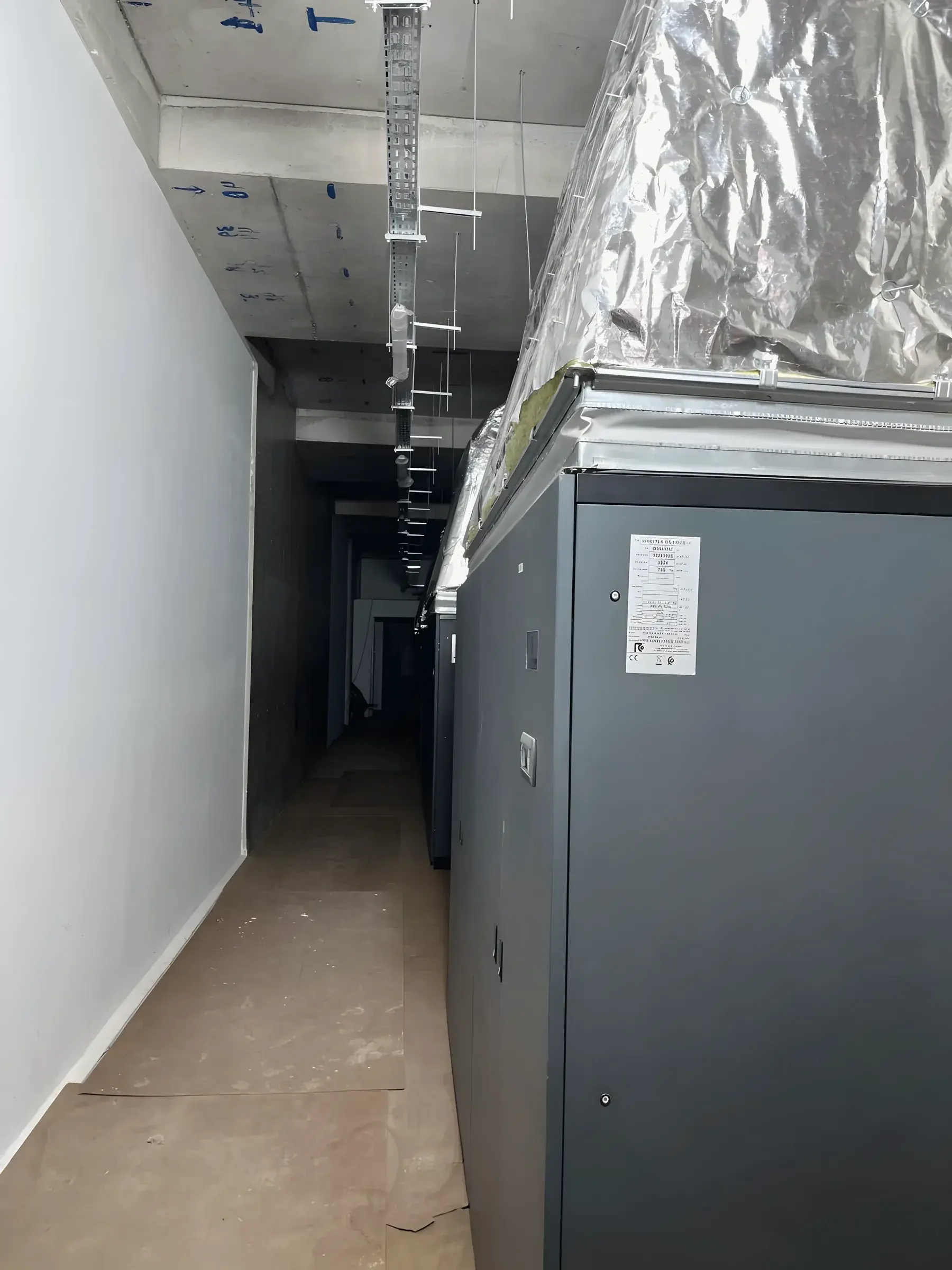
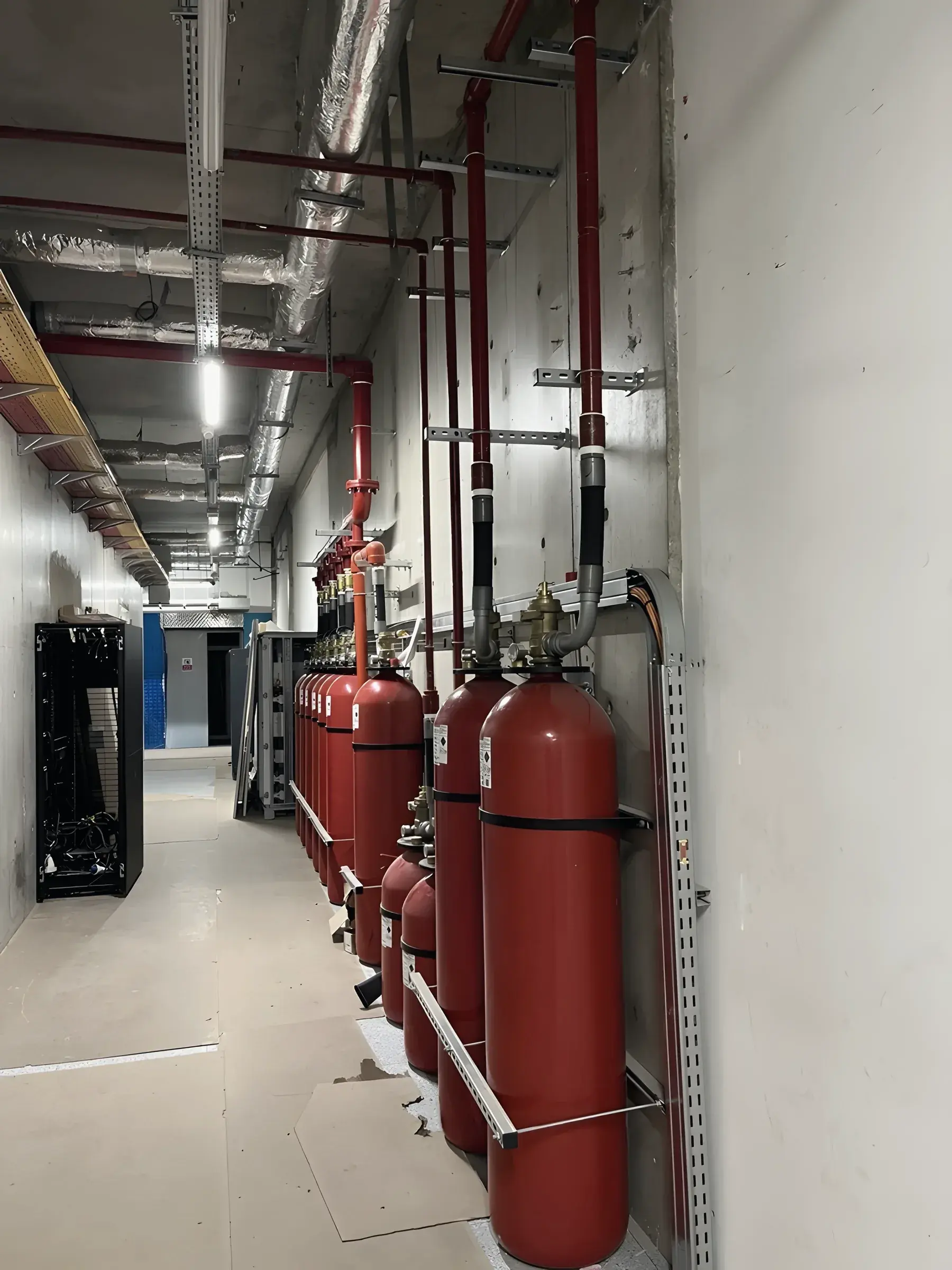
The photographs are from UBIK’s own work. Sites and clients are not identified.
Risks reduced
- A handover in which the construction team leaves and the operators receive a facility they have never run through a failure
- Monitoring that reports everything and supports no decision during an incident
- Procedures written for a generic facility rather than the one that was built
Questions from clients
Questions clients ask before an appointment, with UBIK’s answers.
- Does UBIK run or staff the facility?
- No. UBIK advises the client’s operations team or its appointed operator: it reviews and writes procedures, frameworks and monitoring requirements, and the operating team runs the facility.
- Can UBIK review a facility designed by another firm?
- Yes. The review works from the design documents, the commissioning records and the facility as built, whoever designed it.
- Does UBIK select or implement DCIM?
- UBIK writes the requirements and the selection criteria, evaluates the offers against them and oversees the implementation for the client. It does not resell or configure a platform.
Standards and frameworks
Each is applied alongside local codes and the project brief.
Related references
Each card states whether the work is current UBIK work, a confidential current engagement or leadership experience.

Qatar
QData
3 MW + 2 MW · Tier III certified
Design, construction and operations audit of QData’s certified Tier III campus in Qatar, which hosts a global hyperscaler.
Egypt
Confidential telecom operator
Technical condition, conformity and optimisation assessment of a telecom operator’s 4 MW data center in Egypt, 2025.
Saudi Arabia
Confidential financial institution
Design and operations assessment and a prioritised modernisation plan for a financial institution’s Tier III data center in Saudi Arabia.
Further reading
Articles by the UBIK principals on this subject.
- energy / 6 min readEnergy performance: look beyond a single PUEPUE is useful when its measurement boundary and load assumptions are understood. This article sets out how to read a quoted figure and what it leaves out.
- commissioning / 6 min readCommissioning responsibility matrix: who executes, witnesses and accepts each levelWho executes, witnesses, reviews and accepts each of the five commissioning levels on a data center project, and the record each level should leave.
Next step
Enquiries about this service.
An enquiry should state the project stage, the location, the resilience objective and the technical decision that needs review.