Services / Assessment
Advisory & Feasibility
Technical judgement before capital is committed.
When clients need this
Clients use this service when a site, a design, an asset or an investment case has to be technically sound before a decision becomes expensive to reverse: a land purchase, a utility application, a tender, an acquisition or a certification target.
Due diligence, feasibility studies, site assessments and peer reviews of data centers for owners, developers, operators, investors and contractors. The output is a decision the client can defend: what the site, the design or the asset can support, what it cannot, and what must be resolved before the next commitment.
What UBIK provides
- Technical due diligence report with findings ranked by consequence
- Feasibility study: capacity by phase, resilience objective, power and cooling strategy, programme and order-of-magnitude cost
- Site technical assessment: utility, climate, water, logistics, setbacks and plot capacity at the final phase
- Gap analysis against the target Tier objective and certification scheme
- Peer review of concept and scheme designs, with a closed comment register
Method
The steps in the order the work happens. Each step closes with a record the client keeps.
- 01
Fix the question
The assessment is built around the decision it has to support: buy, proceed, tender, certify or withdraw. UBIK agrees the capacity, the resilience objective and the time horizon with the client before anything is measured.
- 02
Separate fact from assumption
Utility letters, geotechnical data, climate files, concept drawings and vendor budgets are sorted into what is verified, what is assumed and what nobody has checked. Every assumption gets an owner and a date.
- 03
Test the site against the facility
Plot capacity, setbacks, phasing, heat rejection for the climate, water, fuel, logistics and expansion are laid out together on a test-fit. The question is whether the site can hold the facility at its final phase as well as its first.
- 04
Rank what must be resolved
Findings are ranked by what it would cost to be wrong about them. The report closes with the next investigations, who performs them and which decision each one unlocks.
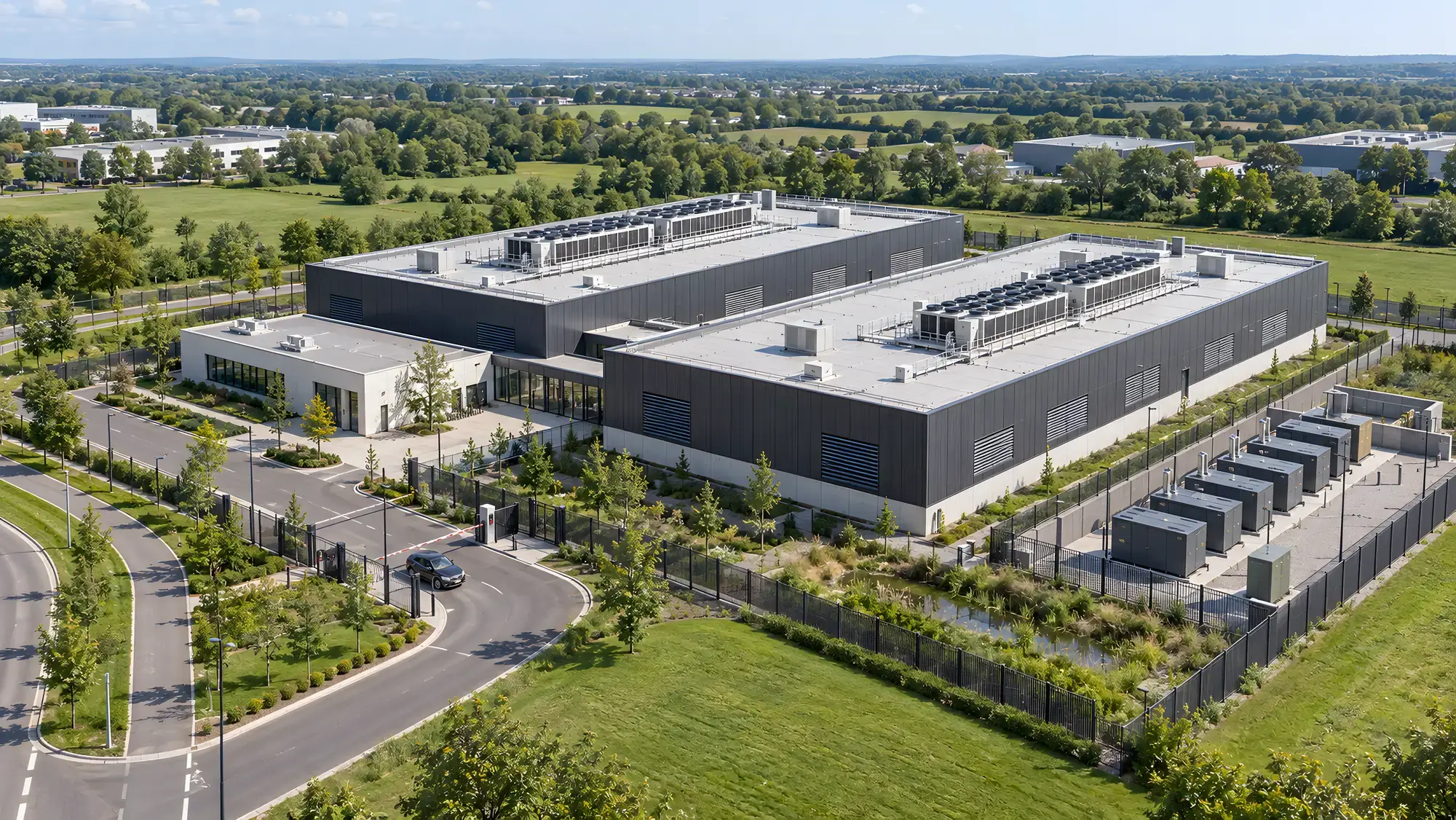
How the system fits together
The system or process this service works on, drawn by UBIK.
In depth
How UBIK approaches this service, in the detail a technical buyer evaluates. Each part opens separately.
01What a feasibility study has to settle
A site and an indicative power figure open a feasibility case. Before a design team can be briefed, five things have to be settled in order, because each constrains the next. They are the capacity the business case needs by phase, the resilience objective in terms a certifier would recognise, the power that is actually available and when, the heat rejection strategy the climate and the water supply will allow, and whether the plot can hold the final phase with its yards, setbacks and expansion.
UBIK’s studies settle those five with the client, in that order, and record which answers rest on evidence and which rest on assumption. A study that reports a capacity without stating whether the utility has committed to it, and for which year, leaves the main risk of the project unresolved.
02Utility capacity and the connection offer
In most of the markets UBIK works in, the utility programme is the critical path. An indicative capacity in an early letter is not a connection offer. The offer fixes the point of connection, the capacity by date, the works on each side of the boundary, the operating restrictions and the tariff structure. Each of those can move the design: a connection at medium voltage instead of high voltage changes the substation, the land take and the standby strategy.
UBIK treats the utility as a technical workstream with its own register: what has been requested, what has been confirmed in writing, what the utility’s own reinforcement programme depends on, and what the client would do if the date slipped by a year. Standby generation is sized against that position and the capacity the utility has confirmed for each phase.
03The site test-fit
Plot capacity is tested by drawing the facility at its final phase on the plot: the data halls, the generator yard with its fuel storage and exhaust separation, the substation and package transformers, the chiller row with the airflow clearances the hottest week demands, the logistics route, the security setbacks and the space the next phase will need. The test-fit is drawn to scale because the constraints interact: a chiller row moved to clear a setback can end up downwind of the generator exhausts.
If the plot cannot hold the final phase, the study says so before the land is bought. The same drawing gives the concept design its first layout and the cost estimate its first quantities, and it carries forward into the design when the project proceeds.
04Due diligence on an existing asset
For an acquisition or a refinancing, the questions change but the method does not. The design is reviewed against the resilience objective the asset is sold on, the condition of the plant is surveyed, and the maintenance records, incident history and capacity headroom are read for the single points of failure that creep into a facility over ten years of growth. The report ranks the findings by what they would cost to put right and by what they would cost if they were ignored.
The client receives a decision document: findings ranked by consequence, an assumptions register with owners, and the next investigations, with who performs them and which decision each one unlocks. Where the answer is that the site, the asset or the design should not proceed as proposed, the report says so and says what would have to change.
Risks reduced
- Committing capital against an indicative utility figure that is not a connection commitment
- Buying a plot that cannot hold the plant, the setbacks and the phasing the business case assumes
- A resilience objective set by the equipment or construction offered rather than by the business case
Questions from clients
Questions clients ask before an appointment, with UBIK’s answers.
- Can UBIK give an opinion from a term sheet and a utility letter?
- Yes, and that is often the right moment. A first opinion on plot capacity, connection credibility and the resilience objective takes two to three weeks with the information that exists. It identifies what to ask the utility, the vendor and the seller before anything is signed.
- How is a feasibility study priced?
- As a fixed fee for a defined scope wherever the scope allows it. The proposal states what UBIK will do, what the client provides and which decision the study informs.
- Does the study cover the commercial case?
- UBIK covers the technical inputs the commercial case depends on: capacity by phase, order-of-magnitude capital cost by system, energy and water demand, programme and the risks that could move them. The financial model stays with the client’s advisers.
Standards and frameworks
Each is applied alongside local codes and the project brief.
Related references
Each card states whether the work is current UBIK work, a confidential current engagement or leadership experience.
Abidjan, Côte d’Ivoire
N+ONE Abidjan
Feasibility and master planning for N+ONE’s 4 MW hyperscale campus programme in Abidjan, Côte d’Ivoire.
Dakar, Senegal
N+ONE Dakar
Feasibility and master planning for N+ONE’s 4 MW hyperscale campus programme in Dakar, Senegal.
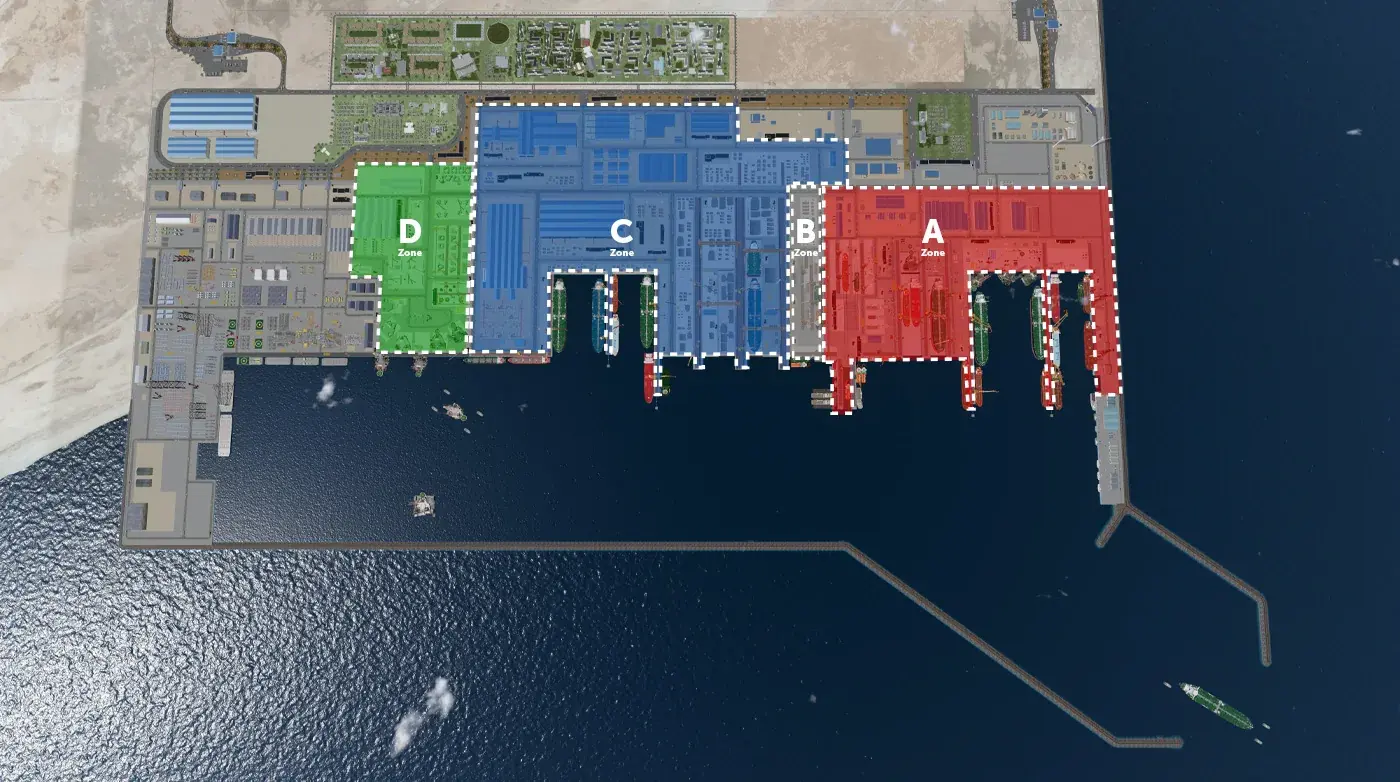
Eastern Province, Saudi Arabia
IMI
Critical infrastructure advisory
Critical infrastructure advisory for International Maritime Industries, a Saudi Aramco affiliate, 2024.
Further reading
Articles by the UBIK principals on this subject.
Next step
Enquiries about this service.
An enquiry should state the project stage, the location, the resilience objective and the technical decision that needs review.