Services / Assurance
Commissioning Management
Governance of factory, site and integrated systems testing.
When clients need this
Clients use this service when factory, site and integrated tests have to prove the resilience the design promised rather than complete a checklist, and when the party testing the installation should not be the party judging the result.
UBIK plans, governs and closes out the commissioning of data centers, from the commissioning plan to the evidence file handed over with the facility. The work covers the responsibility matrix, FAT, SAT and integrated systems testing governance, witnessing and issue tracking. The appointed testing parties execute; UBIK sets what must be proved and keeps the record that proves it.
What UBIK provides
- Commissioning plan and responsibility matrix: scope, stages, prerequisites, roles and acceptance authority
- FAT, SAT and IST governance: test scripts reviewed against the design intent, witness protocols and the scenario schedule
- Integrated systems test scenarios under real load: utility loss, generator and UPS transfers, chiller and pump failures, controls failover
- Issue log, retest tracking and the evidence register
- Commissioning closeout report and handover evidence pack
Method
The steps in the order the work happens. Each step closes with a record the client keeps.
- 01
Define what must be proved
The design basis becomes acceptance criteria: the transfers, the failure states, the capacity and the environmental conditions the facility must demonstrate, with the instrumentation and the load that will show them.
- 02
Review the scripts before the witness
Every FAT, SAT and IST script is checked against the design intent and the sequence of operations. Prerequisites, safety controls and expected responses are agreed before anyone is on site.
- 03
Witness, record, keep the issues open
UBIK witnesses the demonstrations, records the actual result against the expected one and holds every deviation in one log until it is retested and closed. Nothing is signed off by implication.
- 04
Close out with a decision record
The closeout report states what was demonstrated, what was not, what limitations remain and what evidence has gone to the operator and the certifier. The client accepts the facility on that record.
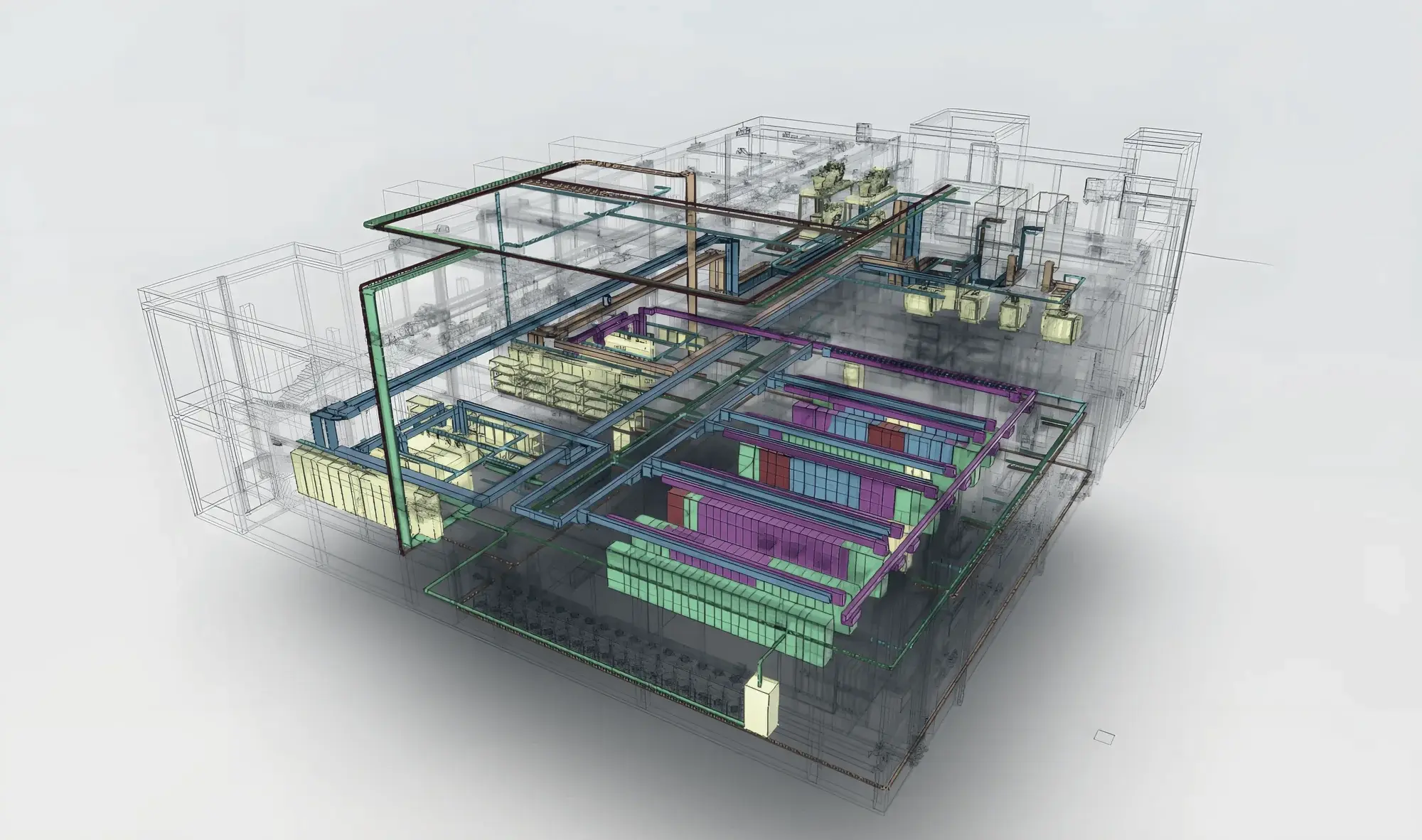
How the system fits together
The system or process this service works on, drawn by UBIK.
From the design model
Views exported from UBIK’s coordinated models, with the systems shown by colour and the building as a wireframe. Sites are not identified.
In depth
How UBIK approaches this service, in the detail a technical buyer evaluates. Each part opens separately.
01Acceptance criteria before anyone tests anything
A commissioning programme can be technically thorough and still leave the client unable to say whether the facility is ready. What is missing is rarely another test. It is an agreed statement of what the facility must demonstrate, in which states, with what load and instrumentation, and who decides whether it has. UBIK writes that statement from the design basis before the first factory visit, and the whole programme is built to answer it.
The responsibility matrix comes with it. Titles such as commissioning agent, authority, manager and provider mean different things in different contracts, so the matrix names who prepares the procedures, who provides the equipment, competent people and safe conditions, who executes, who witnesses, who resolves defects and authorises retests, and who accepts. The appointed testing parties execute the tests and keep their safety and execution responsibilities. UBIK manages the process and judges the result on the client’s behalf.
02Factory, site and integrated tests
Factory acceptance tests ask whether a piece of equipment performs to its specification under controlled conditions. Site acceptance tests ask whether it performs as installed, with its real connections, controls and protection settings. Integrated systems testing asks a different question altogether: whether the facility, as one system, behaves as the design intended when things go wrong. An equipment pass at the factory says nothing about the third question.
UBIK reviews every script against the design intent and the sequence of operations before the witness. Prerequisites are confirmed: installation complete, approved procedures, calibrated instrumentation, safety controls in place, the expected response written down. Then the test is witnessed, the actual result is recorded against the expected one, and any deviation is logged and stays open until it is retested and closed.
03The integrated systems test
The integrated systems test puts the facility at its design load, with load banks standing in for the IT that is not yet installed, and takes it through the scenarios the resilience objective implies:
- loss of utility and its return;
- generator start, synchronisation and transfer;
- UPS discharge, autonomy and recovery;
- each chiller and each pump out of service, in the hottest conditions the test can arrange;
- controls and BMS failover;
- the maintenance states a Tier III objective requires to be demonstrated with the load supported throughout.
The test provisions are designed in at detailed design: the load-bank connections, the instrumentation, the isolation points and the sequence that lets one scenario follow another without restarting the plant. Commissioning management therefore starts at detailed design. Started at mechanical completion, it can only inspect what exists.
04The closeout report
The closeout report states what was demonstrated, what was not, what limitations remain and what evidence has been handed to the operator and to the certifier. A completed checklist does not explain residual risk. The report does, so that the client accepts the facility knowing what it has, and the operations team starts from the facility’s demonstrated behaviour.
Where the project is pursuing Tier Certification of Constructed Facility, the demonstrations are planned with the integrated systems test so that the facility proves its behaviour once, under witness, with the evidence filed for both purposes.
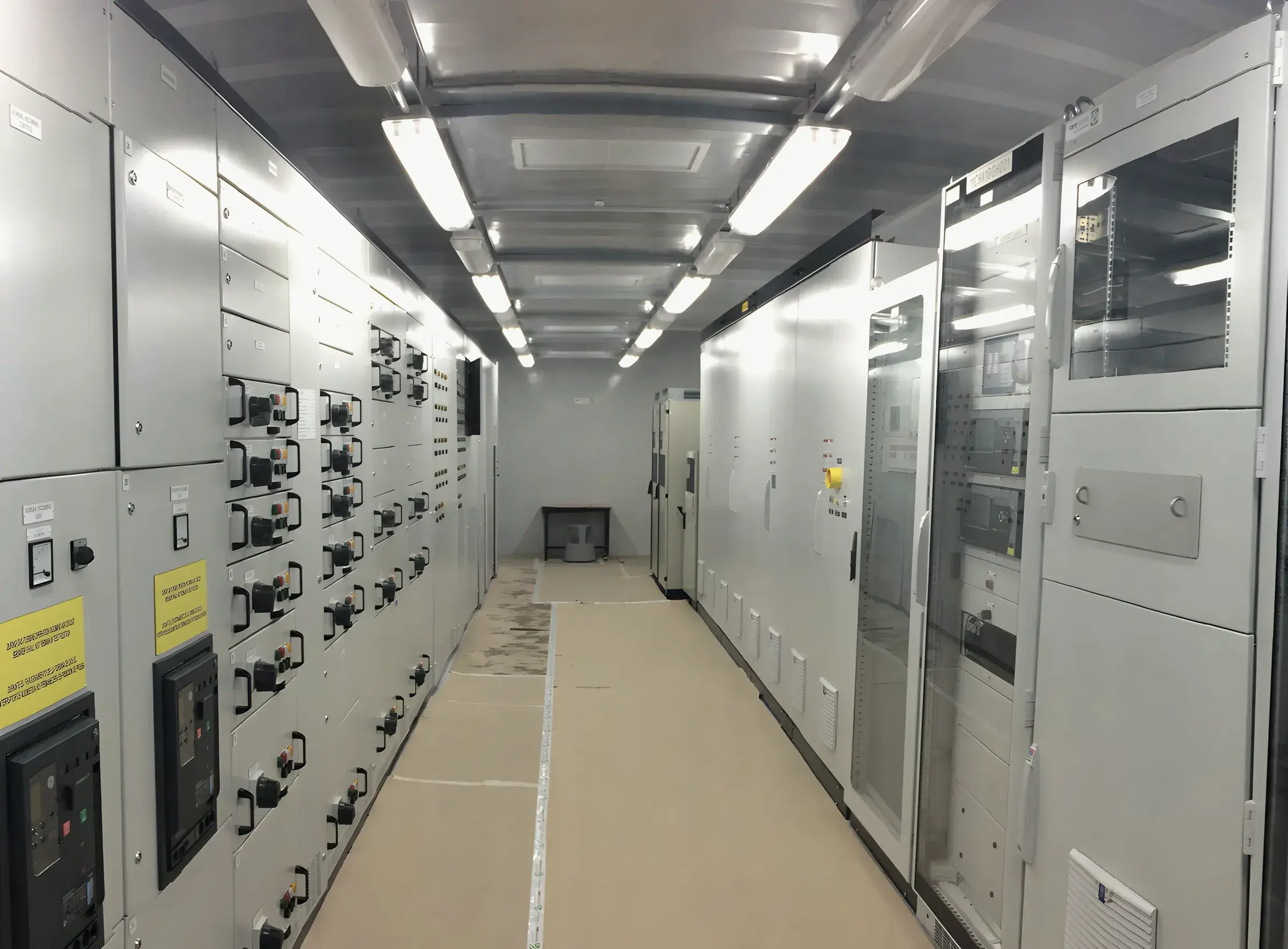
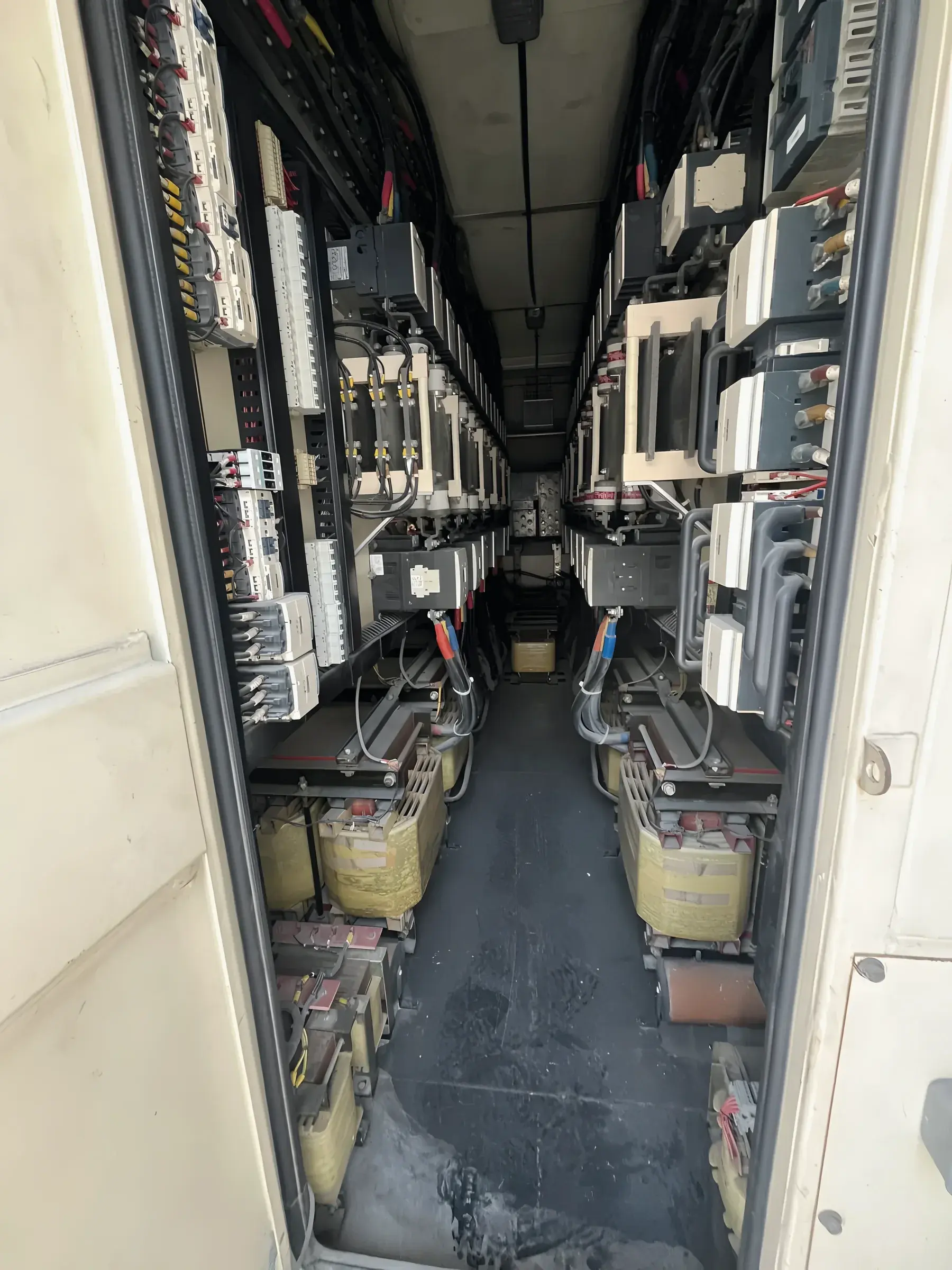
In practice
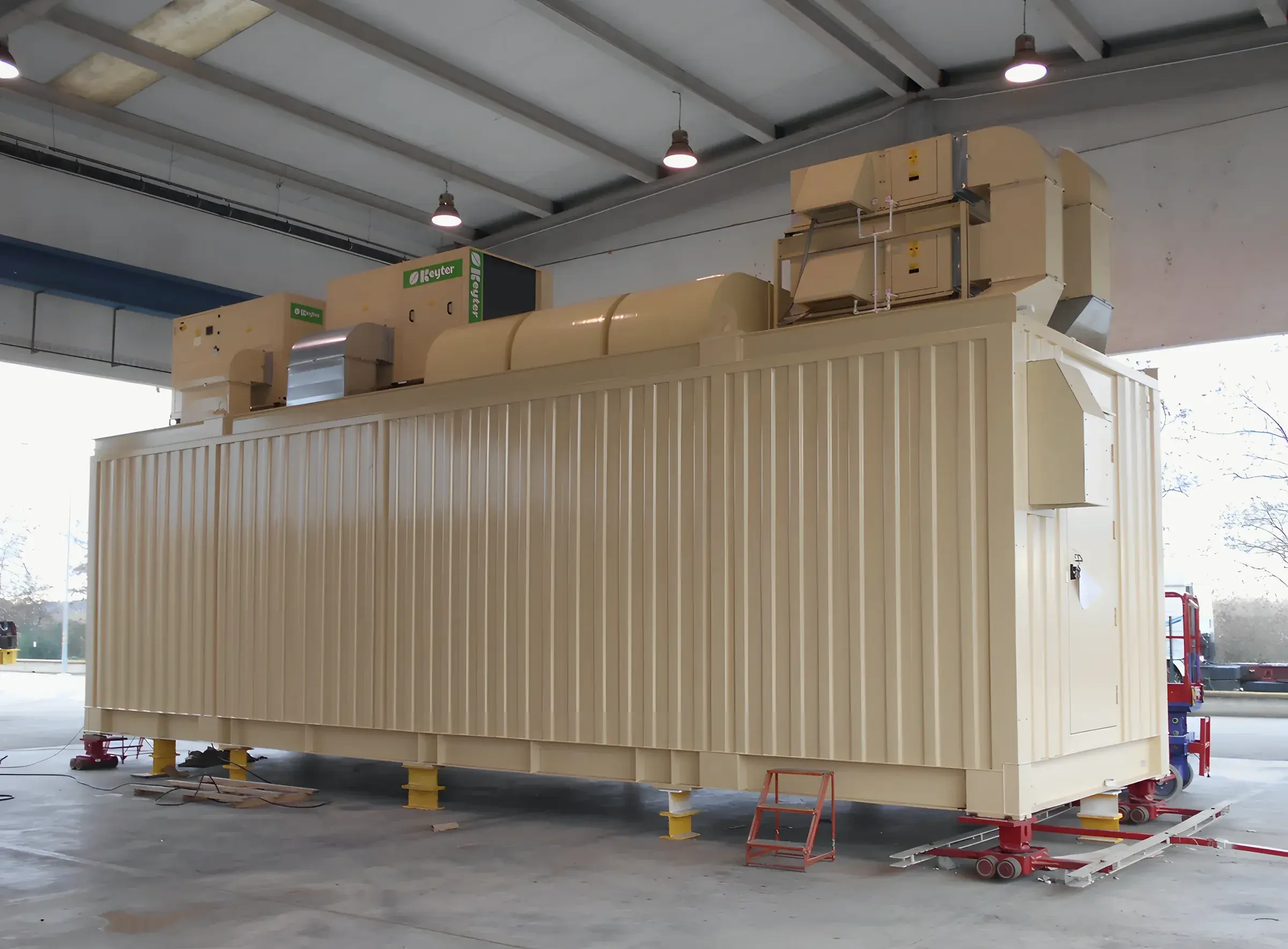
The photographs are from UBIK’s own work. Sites and clients are not identified.
Risks reduced
- Tests that pass the equipment one item at a time while the facility as a whole has never been seen to fail over
- Evidence that cannot support Tier Certification of the Constructed Facility or the client’s acceptance
- A conflict of interest between the party executing the tests and the party accepting them
Questions from clients
Questions clients ask before an appointment, with UBIK’s answers.
- Does UBIK perform the tests?
- No. The contractors, the vendors and the appointed commissioning agent execute them and keep their safety and execution responsibilities. UBIK writes what must be proved, reviews the procedures, witnesses, records and judges the result on the client’s behalf. Testing and acceptance stay with different parties.
- What does an integrated systems test have to include?
- The facility at its design load, with load banks where the IT is not yet installed, taken through the scenarios the resilience objective implies: utility loss and return, generator start and transfer, UPS discharge and recovery, each chiller and pump out of service, controls and BMS failover, and the maintenance states a Tier III objective requires to be demonstrated with the load supported.
- How long does commissioning management last?
- From detailed design, when the acceptance criteria are written into the specifications and the test provisions are designed in, to the closeout report after the integrated systems test. Site activity is concentrated around the factory tests, the site acceptance tests and the integrated systems test.
Standards and frameworks
Each is applied alongside local codes and the project brief.
Related references
Each card states whether the work is current UBIK work, a confidential current engagement or leadership experience.

Casablanca, Morocco
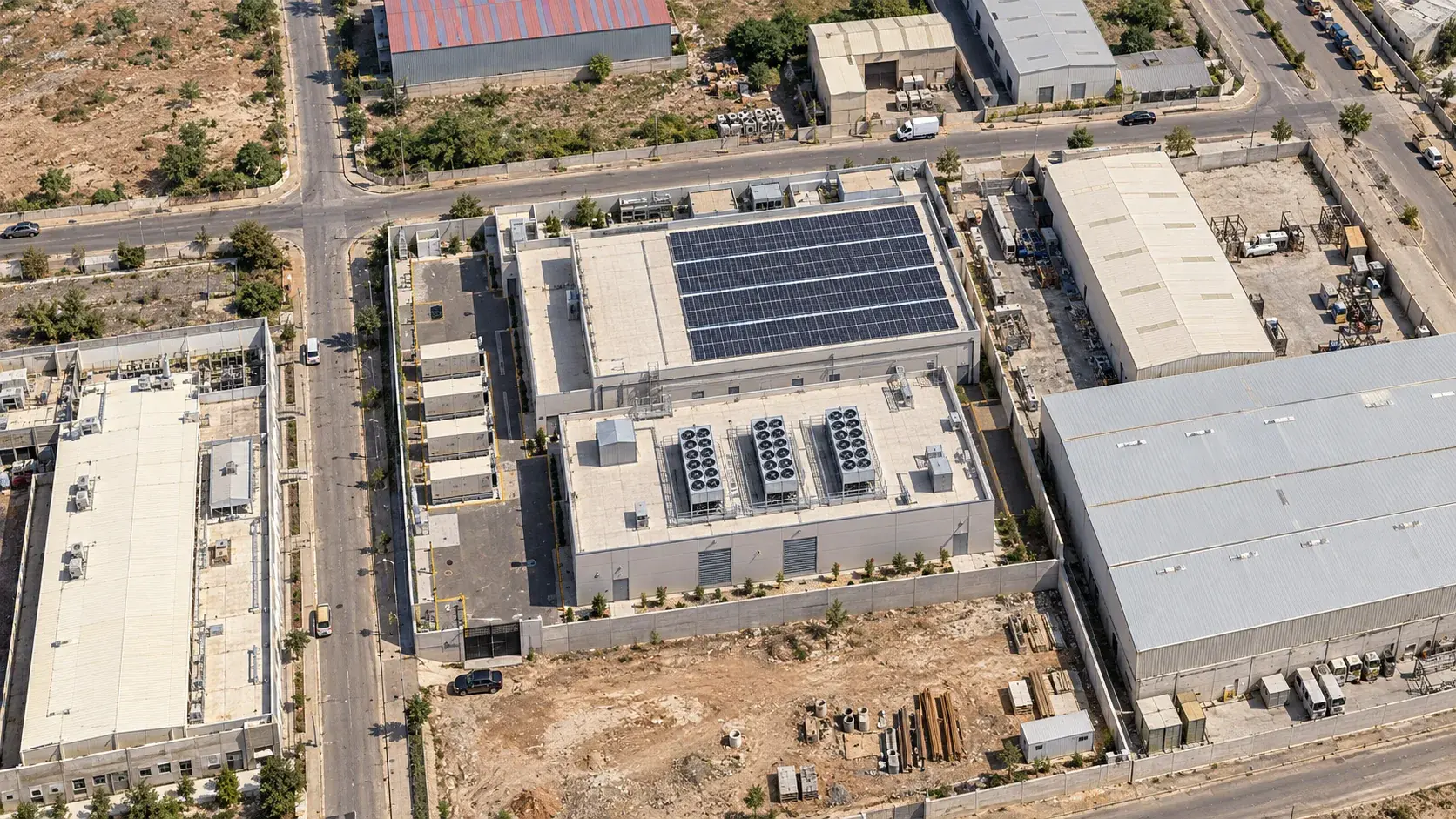
N+ONE CMN, Casablanca
Tier III · 4 MW IT, phased · 8 MW across CMN and STT
Full design, construction direction, commissioning and Tier III certification management for N+ONE’s CMN hyperscale data center, 4 MW of IT load at 15 to 17 kW per rack.
Settat, Morocco
N+ONE STT, Settat
Tier III · 4 MW IT, phased · 8 MW across CMN and STT
Full design, construction direction and commissioning management for N+ONE’s STT hyperscale data center at Settat Park, 4 MW of IT load, developed in parallel with CMN.
Further reading
Articles by the UBIK principals on this subject.
- commissioning / 6 min readCommissioning responsibility matrix: who executes, witnesses and accepts each levelWho executes, witnesses, reviews and accepts each of the five commissioning levels on a data center project, and the record each level should leave.
- certification / 6 min readTier certification: what an owner is actually buyingThis article sets out what each Tier certification verifies, what it does not, and the four decisions about resilience that belong in the design brief.
Next step
Enquiries about this service.
An enquiry should state the project stage, the location, the resilience objective and the technical decision that needs review.