QData Campus Assessment, Qatar
UBIK audited the design, the construction and the operation of QData’s Tier III certified campus of 3 MW and 2 MW, which hosts a global hyperscaler.
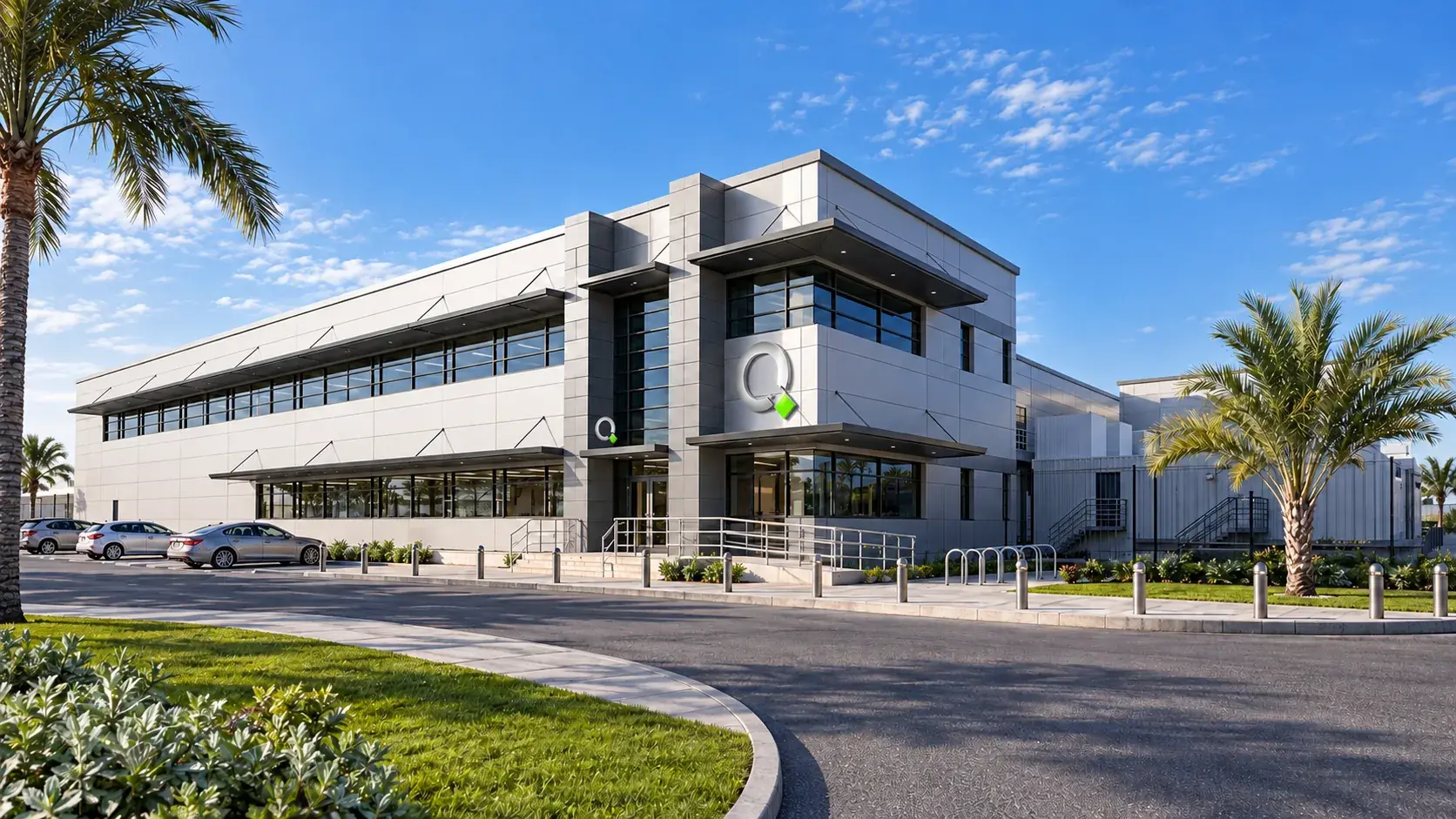
In 2023 UBIK audited QData’s campus in Qatar for the operator: two certified Tier III facilities of 3 MW and 2 MW of IT load, hosting a global hyperscaler. The audit answered three questions for the operator of a certified facility in one document: whether the design still conforms to the Tier standard it was certified against, how well the construction was executed, and whether the facility is operated and maintained as its design intended. The tenant is not named.
The assessment
A Tier certification records the facility as it was at the assessment. Procurement substitutions, construction tolerances, changes made during commissioning and years of operation can all move a facility away from the design the assessor saw. The audit therefore read the single-line diagrams, the cooling schematics and the operating narratives path by path and state by state, walked the constructed facility against them, and read the maintenance records, the procedures, the incident history and the responsibilities of the people on shift against the same intent.
Scope
- Conformity of the design to the Tier standard: topology, maintainability and the failure states, read as the assessor reads them.
- Quality of execution: the constructed facility walked against the drawings, board by board and header by header, with the deviations recorded.
- Operations and maintenance practice: procedures, maintenance regime, monitoring, spares, training and the incident history, assessed against the Uptime Institute Operational Sustainability standard.
- Findings ranked by consequence, with the remediation and the owner of each.
What the work had to resolve
In the Gulf a cooling topology runs at the edge of its design for much of the year, and its assessment has to be made against the site’s climate and the plant’s part-load behaviour rather than its nameplate. On the electrical side, a distributed redundant topology depends on the switching procedures that keep its trains independent, so the single-line diagrams and the procedures were read together.
The three assessments were delivered as one set of findings, because QData’s decisions depended on all three: what the infrastructure can do, what the operation lets it do, and what it would take to close the difference.
Findings, recommendations and the facility’s protected operating information are not published.
Related references
Abidjan, Côte d’Ivoire
N+ONE Abidjan
Feasibility and master planning for N+ONE’s 4 MW hyperscale campus programme in Abidjan, Côte d’Ivoire.
Dakar, Senegal
N+ONE Dakar
Feasibility and master planning for N+ONE’s 4 MW hyperscale campus programme in Dakar, Senegal.